-
Welcome to your new Gnomio site
Now, you are in control!
Moodle is an open-source Learning Management System (LMS) that provides educators with the tools and features to create and manage online courses. It allows educators to organize course materials, create quizzes and assignments, host discussion forums, and track student progress. Moodle is highly flexible and can be customized to meet the specific needs of different institutions and learning environments.
Moodle supports both synchronous and asynchronous learning environments, enabling educators to host live webinars, video conferences, and chat sessions, as well as providing a variety of tools that support self-paced learning, including videos, interactive quizzes, and discussion forums. The platform also integrates with other tools and systems, such as Google Apps and plagiarism detection software, to provide a seamless learning experience.
Moodle is widely used in educational institutions, including universities, K-12 schools, and corporate training programs. It is well-suited to online and blended learning environments and distance education programs. Additionally, Moodle's accessibility features make it a popular choice for learners with disabilities, ensuring that courses are inclusive and accessible to all learners.
The Moodle community is an active group of users, developers, and educators who contribute to the platform's development and improvement. The community provides support, resources, and documentation for users, as well as a forum for sharing ideas and best practices. Moodle releases regular updates and improvements, ensuring that the platform remains up-to-date with the latest technologies and best practices.
Links of interest:
(You can edit or remove this text)
Available courses
Mathematics for Statistics is a foundational course that equips learners with the essential mathematical tools needed to understand and apply statistical methods effectively. The course bridges core areas of Mathematics and Statistics, focusing on concepts that support data analysis, interpretation, and decision-making.
The course typically begins with a review of algebraic techniques, including equations, inequalities, functions, and graphs. These concepts are crucial for modeling relationships between variables. Learners then explore functions in depth, including linear, quadratic, exponential, and logarithmic functions, which are widely used in statistical modeling.
A significant component of the course is calculus, particularly differentiation and integration. Differentiation helps in understanding rates of change and optimization problems, while integration is useful in finding areas under curves and working with probability distributions. Concepts such as limits and continuity form the basis for these topics.
The course also introduces matrices and basic linear algebra, which are important in handling multivariate data and solving systems of equations. These tools are commonly applied in advanced statistical techniques such as regression analysis.
Additionally, learners are exposed to sequences and series, as well as basic probability theory. Topics such as permutations, combinations, and probability rules provide a mathematical foundation for understanding statistical inference and data analysis.
By the end of the course, students are expected to:
- Apply algebraic and calculus-based methods to solve statistical problems
- Interpret mathematical models used in statistical analysis
- Use matrices and functions to analyze data relationships
- Build a strong foundation for advanced topics in Inferential Statistics and data science
- Teacher: Admin User
Inferential Data Analysis is a course that focuses on using sample data to make generalizations, predictions, and decisions about a larger population. It equips learners with statistical techniques for estimating population parameters, testing hypotheses, and determining relationships between variables. The course emphasizes both theoretical understanding and practical application of statistical inference in real-world contexts such as research, business, health sciences, and social sciences.
Learners will explore key concepts including probability distributions, sampling methods, estimation techniques, confidence intervals, hypothesis testing, correlation, and regression analysis. The course also introduces the use of statistical software for data analysis, interpretation, and reporting of findings.
By the end of the course, students will be able to analyze data critically, draw valid conclusions, and communicate statistical results effectively for informed decision-making.
- Teacher: Admin User
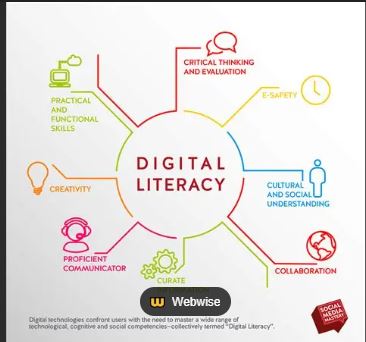
This unit describes competencies required to demonstrate digital literacy. It involves in identifying computer software and hardware, applying security measures to data, hardware, software in automated environment, computer software in solving task, internet and email in communication at workplace, desktop publishing in official assignments and preparing presentation packages.
- Teacher: Admin User